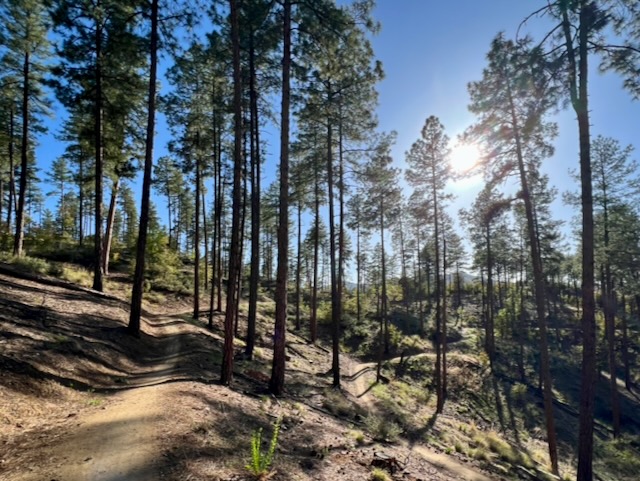
I ran a slow and steady pace up to the hut on the side of New Hampshire’s Mount Lafayette on this, the second morning of the new year. It’s a mountain I know perhaps better than any other, having worked and lived in its shadow for many years. Its profile, as painted by my late father, is tattooed on my inner arm, as the topographic map of the ridge atop which it rests is on my leg. There had been an ice storm on earlier in the week, and new snowfall besides, and the sun shone crystalline through branches still enveloped in ice — and cast shadows of rime-frosted spruce and fir.
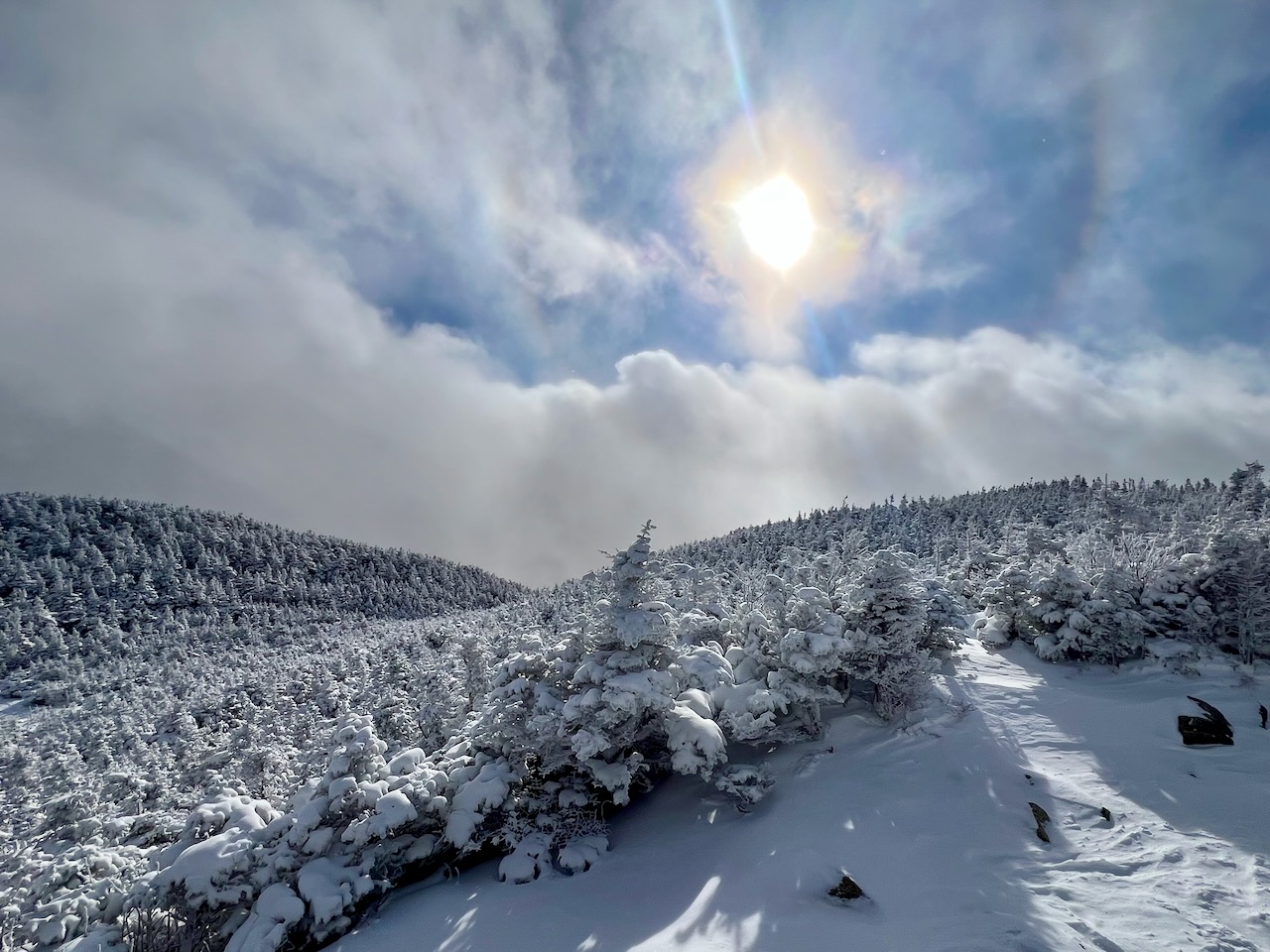
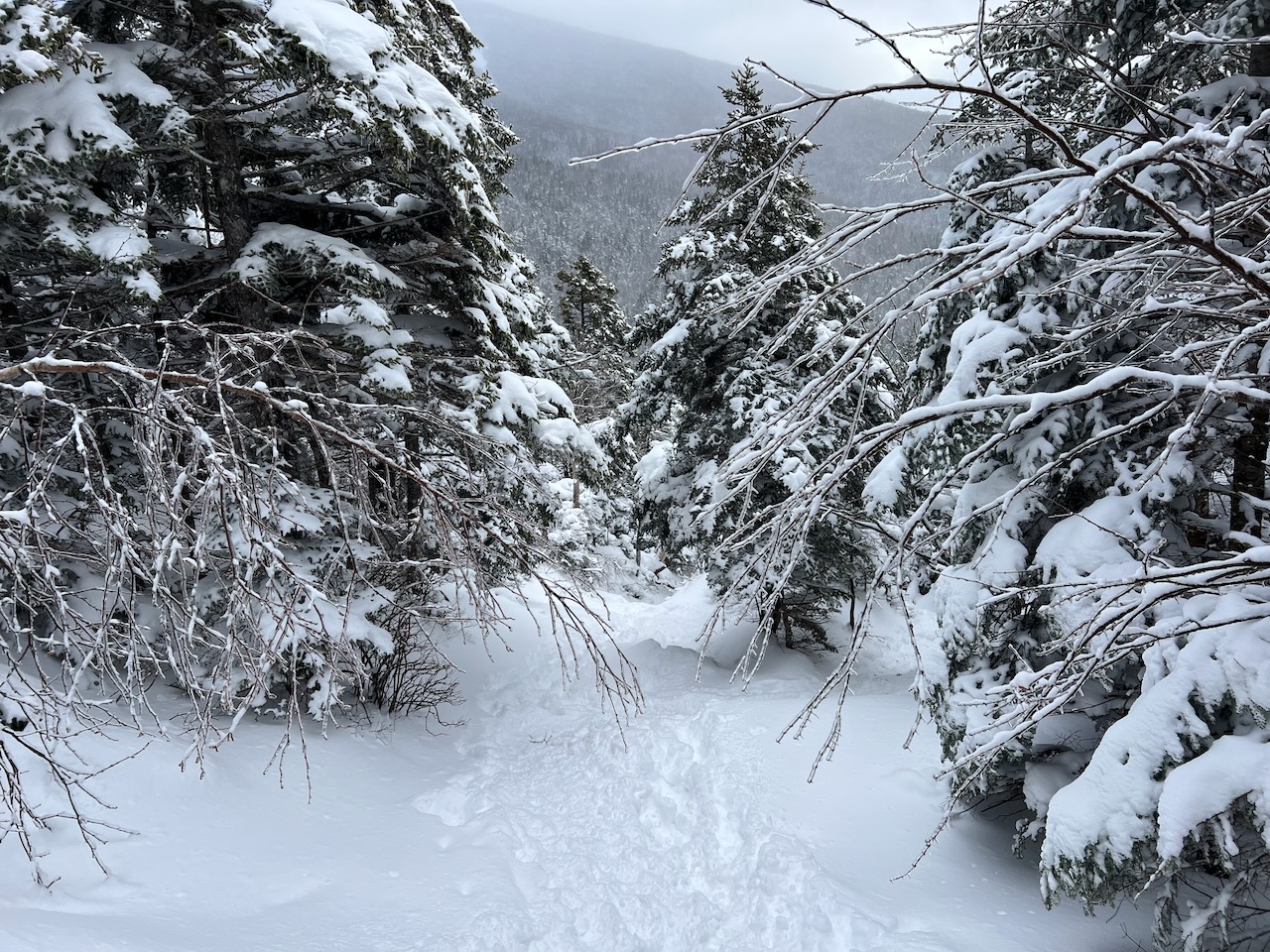
At one point, I had to bend down to pass through the branches of ice-covered birch trees enwtined across the trail, and through a curtain that opened the way upward into the alpine zone above. Throughout this morning’s run on Lafayette, I kept repeating to myself lines from Robert Frost’s 1915 poem, “Birches”:
When I see birches bend to left and right
Across the lines of straighter darker trees,
I like to think some boy’s been swinging them.
But swinging doesn’t bend them down to stay
As ice-storms do.
My connection to Frost is through the landscapes of the Northeast, mostly, but also through a shared experience of writing; I finished writing my disseration — research about these very New Hampshire mountains — sat at Frost’s own writing table in his Franconia, New Hampshire home, where he and his family lived from 1915-1920, and from whose desk I could see the very woods through which I ascended this morning.
“Birches” has been read and re-read an uncountable number of times (often by reluctant high school and college students in required classes), and all manner of interpretation woven through its bent birch boughs. In my years of being in place with the poem (inspired, certainly, by the wonderful reading of Frost’s poem, “Directive” by John Elder in his 1995 book, Reading the Mountains of Home), it’s been both the delicate climb — to “climb black branches up a snow-white trunk” — and the declination “to earthward” —
Toward heaven, till the tree could bear no more,
But dipped its top and set me down again.
That would be good both going and coming back.
— That have kept me good company in my woods- and words-ward gyres.
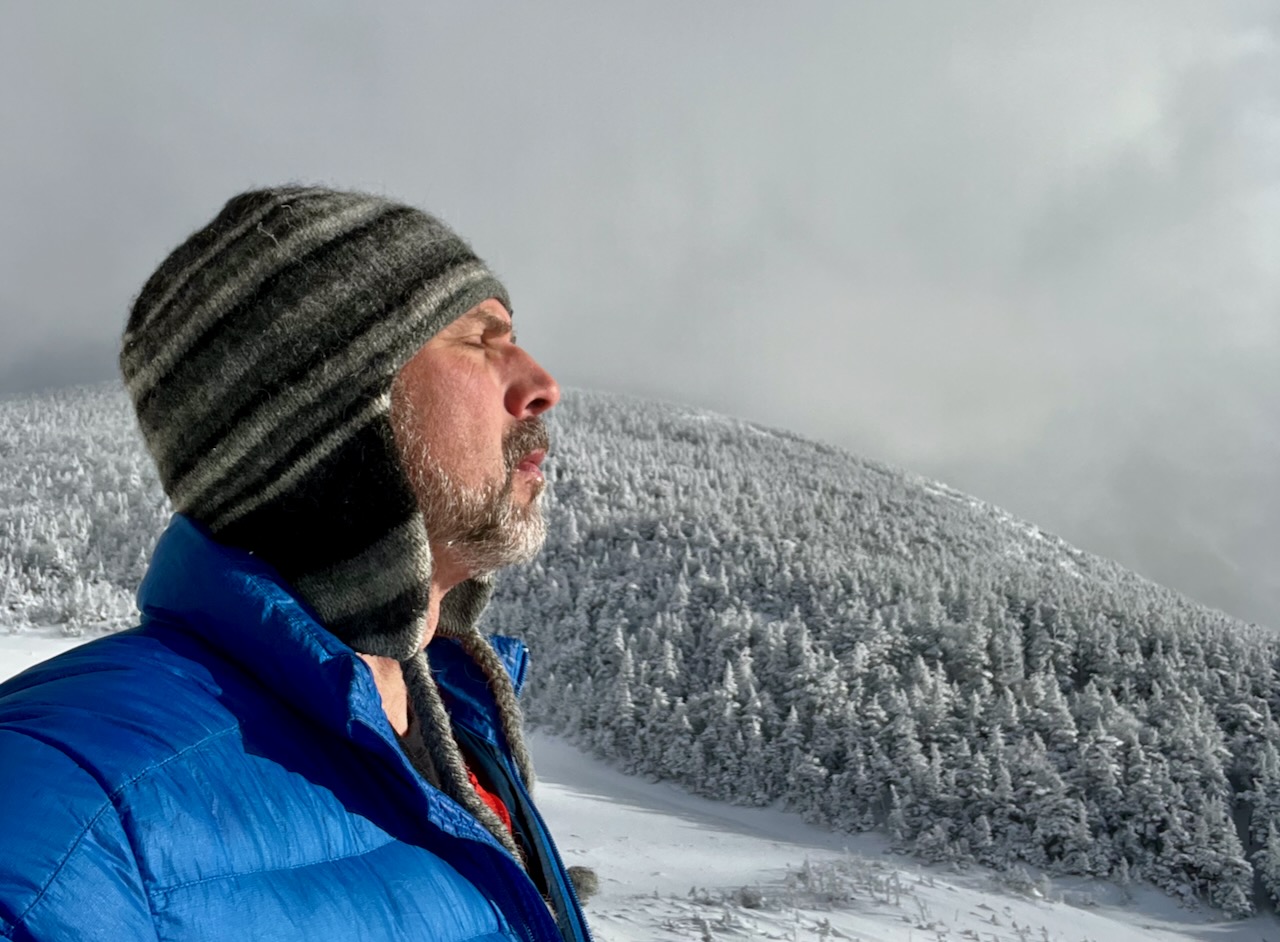
As I approach whatever milestone is next (“He’s fifty-five, you know, if he’s a day [That’s no way for a man to do at his age]” …“a change of mood” … “a moment sought in air” … “forever finding some new play”), my body has retained the grammar of these trees and helps me find the way by learning how to bend to left and right whatever those straighter, darker trees may be.
One could do worse than be a swinger of birches
after all.


 Climate Run
Leave a comment